

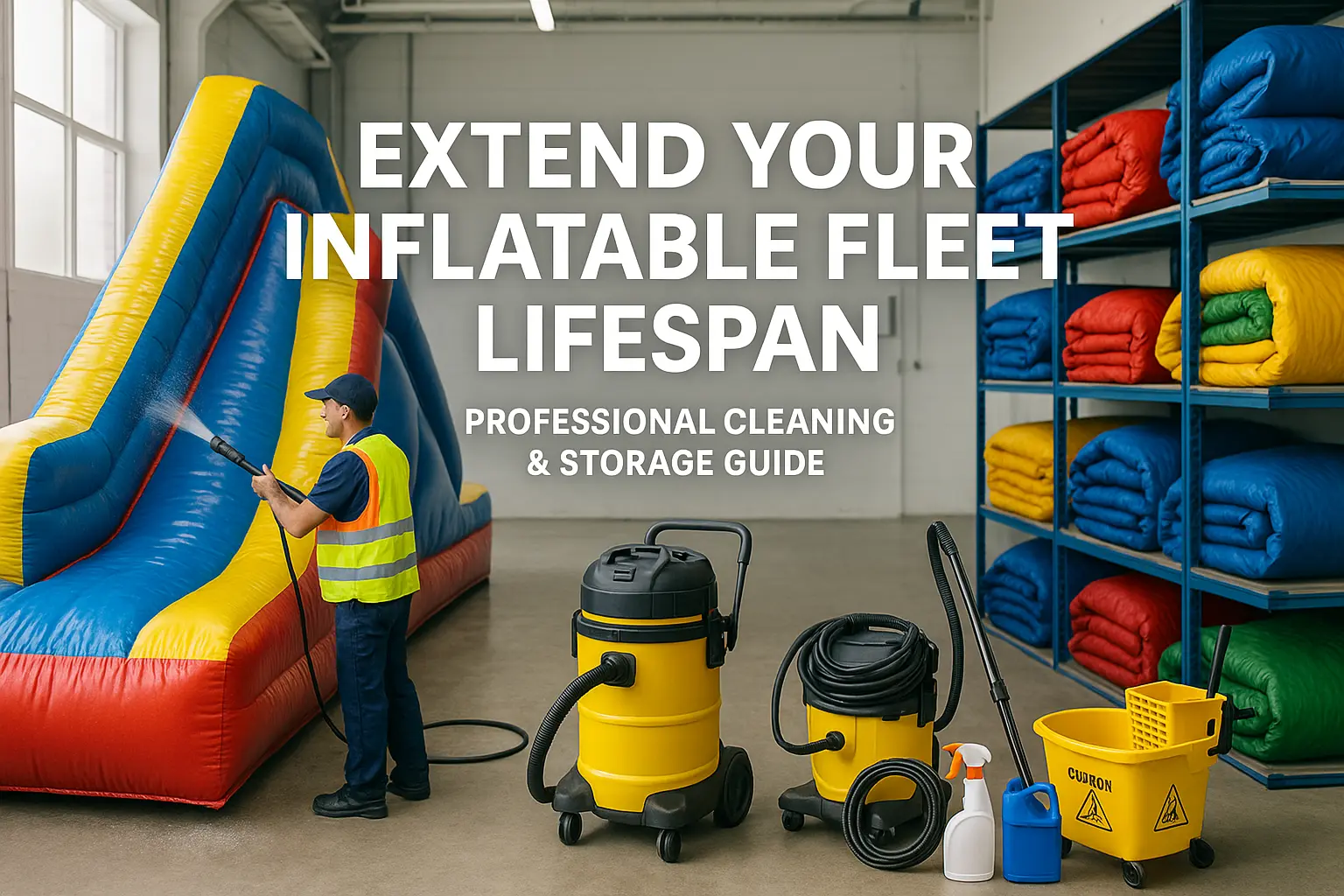
Complete Commercial Inflatable Maintenance Guide: Cleaning, Drying & Storage to Maximize Lifespan
Investing in commercial inflatables is a major financial decision for water parks, event rental companies, and recreational amusement facilities. Your inflatable fleet, including bounce castles, water slides, and interactive inflatable attractions, accounts for a core part of your business operational assets. To protect your investment and maximize long-term ROI, standardized daily maintenance, scientific cleaning procedures, and professional storage practices are indispensable.
Professional inflatable care is far more than maintaining a neat appearance. It preserves structural integrity, ensures user safety, avoids frequent equipment failures, and prevents costly premature replacements. With consistent and correct maintenance, high-quality commercial inflatables can deliver stable, reliable performance for multiple operating seasons, fully leveraging the value of your initial investment.
Understand Commercial Inflatable Materials for Targeted Care
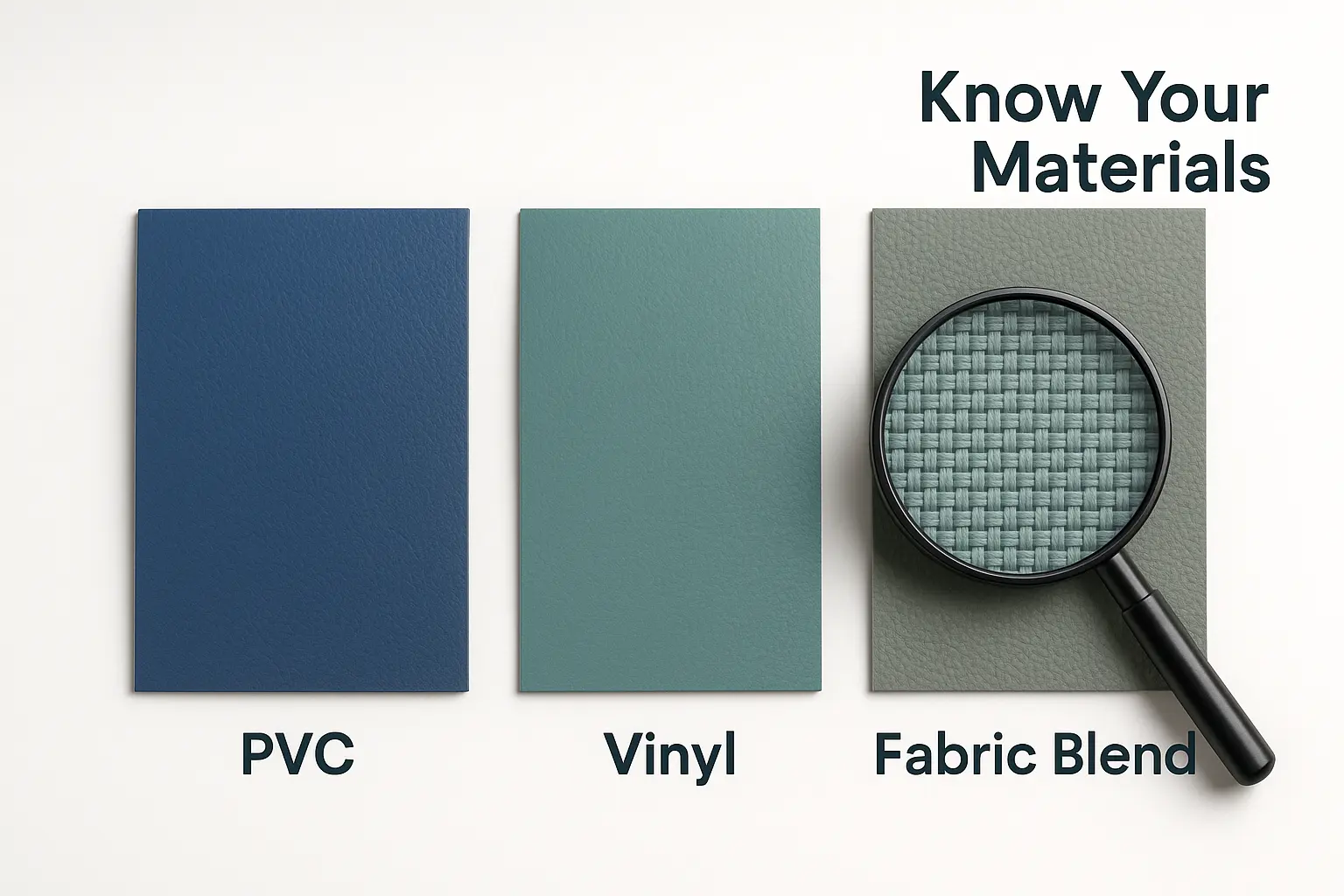
Almost all premium commercial inflatables are crafted from industrial-grade PVC, vinyl, or high-strength composite fabric blends, engineered to withstand heavy commercial use, frequent inflation and deflation, and complex outdoor weather conditions. Different materials feature unique properties, requiring customized cleaning and storage methods to avoid material damage and performance degradation.
PVC Material: Boasts excellent durability, water resistance, and chemical corrosion resistance. It is the preferred material for water park inflatables and water-based recreational equipment, adapting to long-term humid and wet environments.
Vinyl Material: Features superior flexibility, tensile strength, and abrasion resistance. Widely used in bounce houses, inflatable castles, and dry-play amusement structures, it delivers comfortable elasticity and stable structural support.
Regular visual and tactile inspections are essential to identify early wear signs, including tiny punctures, stretched seams, surface fading, and material thinning. Timely minor repairs effectively stop small defects from evolving into irreversible structural damage, saving massive maintenance and replacement costs.
Standard Cleaning Protocols for Commercial Inflatables
Scientific cleaning is the foundation of inflatable maintenance. Improper cleaning with harsh tools or chemicals will accelerate material aging, damage surface waterproof coatings, and even void manufacturer warranties. Follow this standardized cleaning process for optimal results.
Pre-Cleaning Preparation
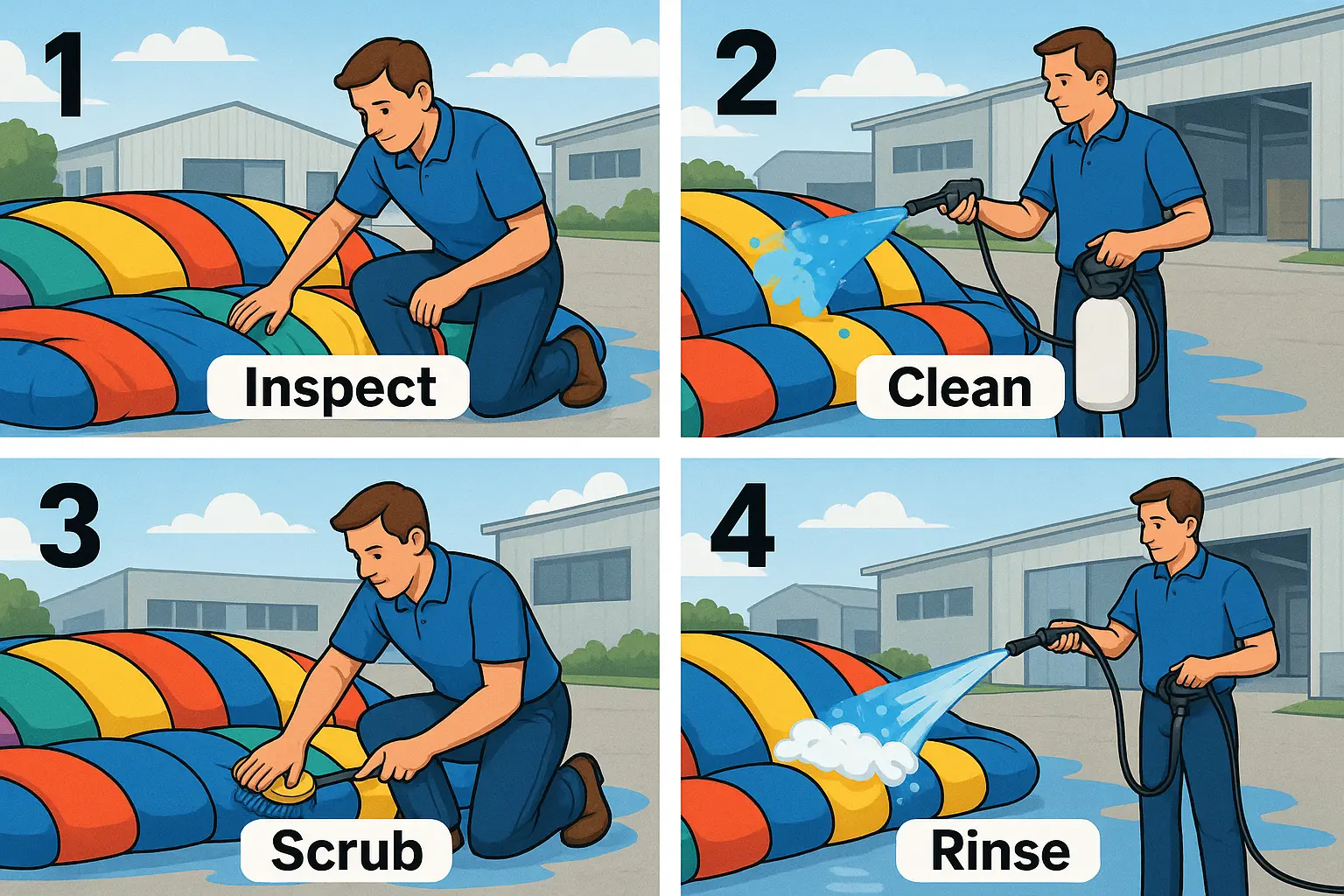
Fully deflate the inflatable and spread it flat on a clean, soft ground. Conduct a comprehensive full inspection to check for existing damage, avoiding secondary wear during cleaning. Prepare dedicated cleaning supplies: mild neutral detergent, soft microfiber brushes, clean fresh water, and protective gloves. Never use hard brushes, steel wool, or abrasive tools.
Step-by-Step Cleaning Process
First, remove loose dust, sand, and surface debris with a soft cloth or brush. Prepare a dilute mild detergent solution - strong alkaline or acidic chemicals will erode PVC and vinyl materials, causing hardening, cracking, and fading over time.
Clean the inflatable in sections, adopting gentle circular brushing motions. Focus on high-contact and high-traffic areas such as slide surfaces, jumping zones, and handrails, where embedded dirt, sweat, and oil stains accumulate easily. For stubborn local stains, apply a homemade baking soda and water paste for mild physical decontamination, which removes stains safely without scratching the material.
For mold and mildew growth in humid environments, use a diluted vinegar solution for cleaning and disinfection. It effectively eliminates mold spores without leaving harmful chemical residues or damaging inflatable materials.
Finally, rinse the entire equipment thoroughly with clean water repeatedly to remove all detergent residues. Residual soap will stick to the surface, attracting more dust and forming slippery areas that pose serious safety hazards for users.
Professional Drying Techniques to Avoid Mold & Degradation
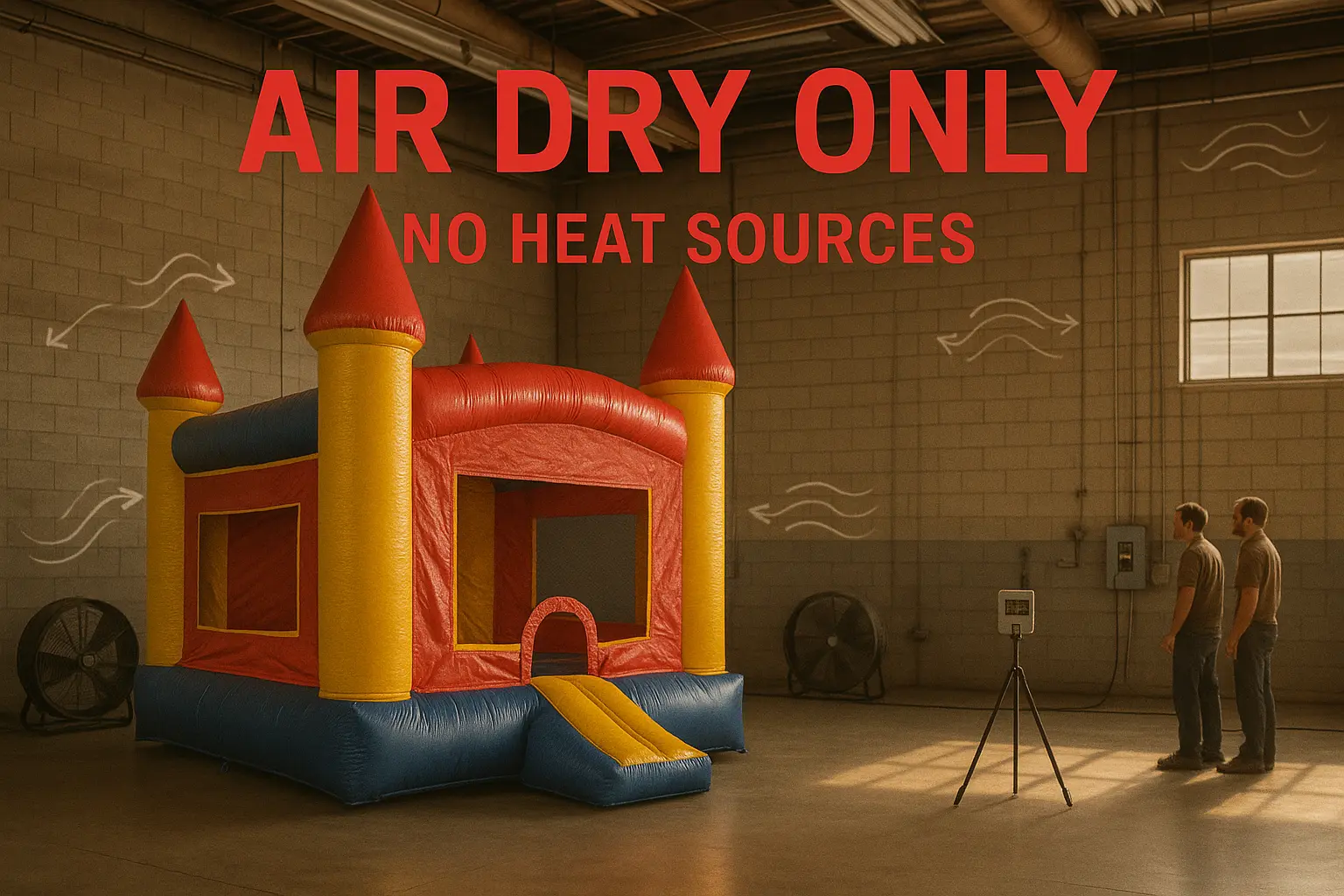
Incomplete drying is the leading cause of mold growth, seam mildew, and material deterioration for stored inflatables. Heat drying is strictly prohibited, as high temperatures will cause material shrinkage, surface warping, and structural cracking.
Choose a cool, shaded, and well-ventilated area for natural air drying, avoiding direct long-term sunlight exposure. Strong UV rays will accelerate material aging, fade colors, and reduce the tensile strength of PVC and vinyl fabrics.
Fully unfold the inflatable to ensure no folded dead angles or hidden moisture pockets. Regularly reposition and flip the equipment during drying to guarantee uniform air circulation on all surfaces. Seams, crevices, and folded edges are key drying areas where moisture is most likely to accumulate.
Confirm 100% dryness before storage. Although natural drying takes several hours or days depending on equipment size and weather conditions, this step effectively avoids long-term mold breeding and seam loosening damage.
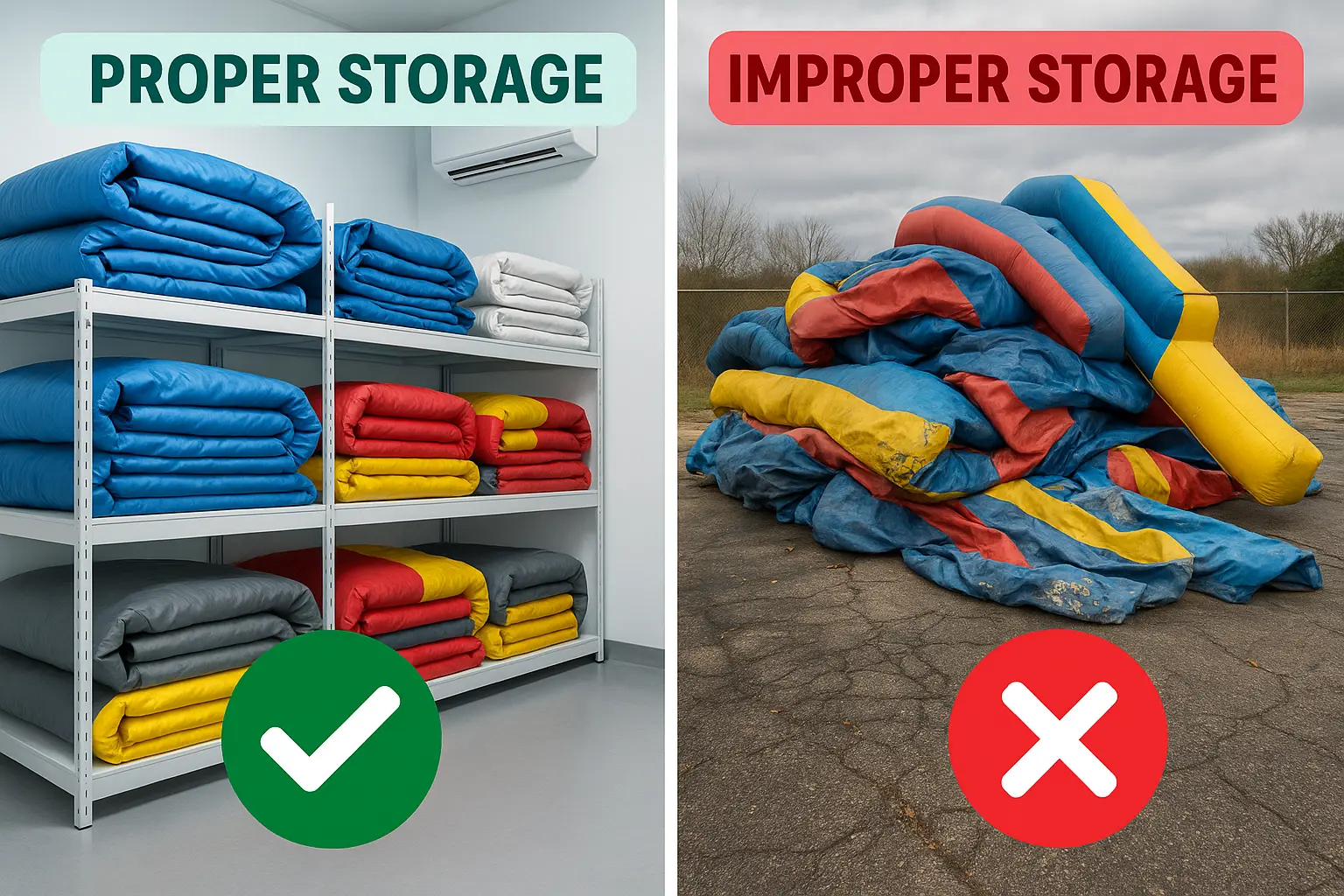
Strategic Storage Solutions for Long-Term Protection
Scientific storage directly determines the service life of commercial inflatables. Reasonable storage environments and folding methods can greatly reduce natural wear and extend equipment usability.
Optimal Storage Environment
Climate-controlled indoor storage is the best choice for commercial inflatable fleets. A stable environment with a temperature of 50–70°F and moderate humidity prevents material brittleness caused by excessive dryness and mold growth caused by excessive humidity. It also isolates UV radiation, rain, snow, and extreme temperature changes.
If indoor storage is unavailable outdoors, use high-quality breathable waterproof covers to wrap the equipment. Elevate inflatables off the ground to prevent ground moisture penetration, pest infestation, and bottom material abrasion.
Standard Folding & Storage Methods
Follow the original seam lines for folding to avoid sharp artificial creases on high-stress areas. Random folding will form permanent stress concentration points, leading to local cracking and seam breakage after long-term storage. Place soft protective cloths between folded layers to reduce surface friction and wear.
Do not stack heavy objects on stored inflatables to prevent material compression deformation and structural damage. Keep the storage area clean and free of sharp debris to avoid accidental punctures.
Scientific Seasonal Maintenance Schedule
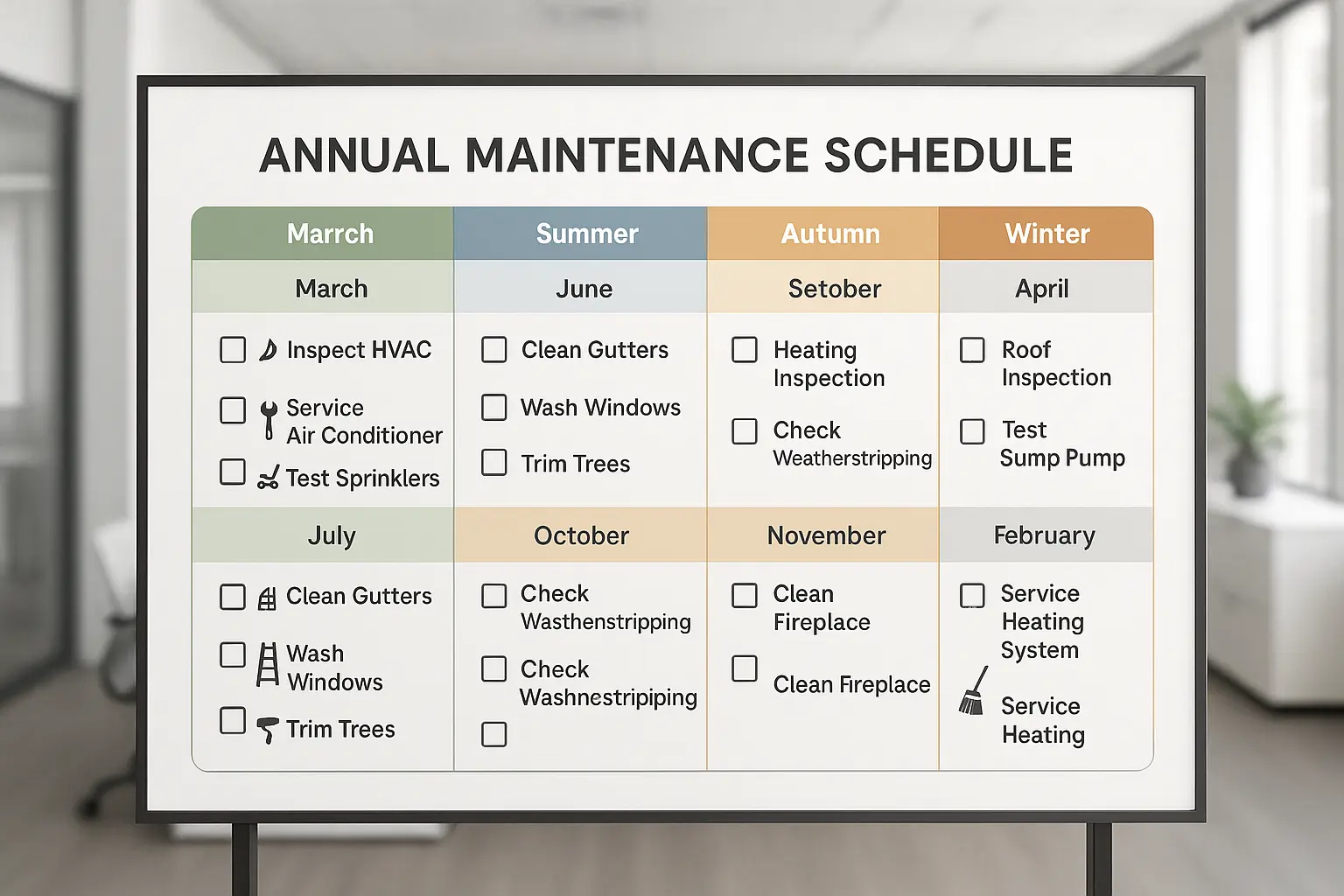
Establish a standardized cyclic maintenance system to realize full-cycle protection of commercial inflatables, avoiding centralized failure during peak business seasons.
Monthly Routine Inspection: Check the whole equipment for tiny punctures, loose seams, and abnormal wear. Verify that the storage environment is dry, ventilated, and free of hidden dangers, and handle minor problems in a timely manner.
Seasonal Deep Maintenance: Conduct full deflation, deep cleaning, comprehensive defect inspection, and dry storage before off-season long-term storage. Eliminate potential hidden dangers caused by gradual wear and tear during the operating period.
Pre-Season Preparation: Before the opening of the peak operating season, fully inflate the equipment for pressure testing, inspect all seams, connectors, and valve accessories, and test the functional performance of mechanical parts. Ensure the entire inflatable fleet is in optimal working condition and avoid on-site equipment failures that affect business operations.
Common Maintenance Mistakes That Shorten Inflatable Lifespan
Most premature aging and damage of commercial inflatables stem from daily operational errors. Avoid these common mistakes to protect your equipment investment:
- Harsh chemical cleaning: Using bleach, industrial solvents, and strong detergents will corrode inflatable materials, damage waterproof coatings, and void official manufacturer warranties.
- Wet storage: Storing undried inflatables is the main cause of large-area mold, seam mildew, and fabric rotting.
- Improper folding & stacking: Random folding and heavy stacking cause permanent stress damage and local material fatigue.
- Overload use: Exceeding the official rated load capacity puts excessive pressure on seams and materials, leading to structural deformation and cracking.
When to Choose Professional Maintenance & Replacement
Distinguishing DIY repairable faults and professional-only damage helps businesses control costs accurately. Minor surface stains, tiny punctures, and local slight abrasion can be fixed with daily DIY repair kits with low cost and high efficiency.
However, large-area seam separation, internal structural damage, widespread material aging, and safety-critical component failure require professional manufacturer maintenance. Unauthorized DIY repairs may cause secondary damage and void warranty coverage.
As a professional commercial inflatable manufacturer, Minye Fun provides one-stop after-sales support, including professional maintenance guidance, customized repair services, and equipment replacement suggestions, ensuring all equipment meets original safety and performance standards.
Conclusion: Protect Your Inflatable Business Investment
Commercial inflatable maintenance is a core part of business operation management. Standardized cleaning, drying, storage, and seasonal maintenance can effectively extend equipment service life, reduce long-term operating and replacement costs, and maintain high safety standards and business reputation.
Consistent proactive maintenance enables high-quality PVC and vinyl inflatables to maintain stable performance for years, bringing continuous and reliable economic benefits for water parks, event rental businesses, and amusement venues. Every standardized maintenance operation is a long-term protection for your business investment.
For customized commercial inflatable maintenance solutions and premium inflatable equipment, contact Minye Fun's professional team to create exclusive operation and maintenance strategies for your venue.


